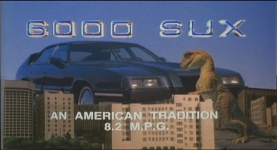
Are we still convinced that electric vehicles are the best way forward?

teamzr1

Supporting vendor
After the federal $7,500 EV tax credit expired at the end of September, sales of battery-powered cars fell off a cliff.
Car companies with electric vehicles all posted massive drops in October, the first full month without the incentive that had helped prop up demand for more than a decade.

The credit, first introduced in 2008 and expanded under President Joe Biden, offered up to $7,500 for qualifying electric cars built primarily in the US.
That changed when President Donald Trump signed the Big Beautiful Bill Act in July, ending the program effective September 30.
Buyers rushed to lock in deals before the deadline, leaving dealerships with empty lots and automakers with a sales sugar crash.

Hyundai's all-electric lineup plunged 71 percent month-to-month, with the popular Ioniq 5 down 80 percent.
Toyota sold just six of its bZ4X crossovers in October, compared with 1,401 the month before.
Ed Kim, president and chief analyst at AutoPacific, says the impact will hit the hardest on affordable EVs meant to lower the cost of entry starting in 2026.

The next-generation Nissan Leaf, for example, will start around $30,000, but without the credit, it loses a crucial price cushion that could have brought it closer to $22,500.
Slate, an American-made EV truck brand with Jeff Bezos' backing, initially said it would produce a small truck for Americans at around $20,000. Without the credit, industry analysts expect the car's price will be closer to $30,000.

For entry-level buyers, that difference can be make-or-break.
'Price is one of the biggest reasons people won't buy an EV,' Kim says.
'To an entry-level consumer, the difference between $22,500 and $30,000 is massive, and it's safe to say that a $30,000 EV won't have the same impact as a $22,500 one would.'

Even so, there was a smudge of hope for drivers hoping to reduce their carbon footprint: hybrid sales are booming.
Hyundai reported a 41 percent jump in hybrid sales last month, suggesting Americans still want to go electric.
Still, 2026 is a make-or-break year for electric vehicle sales.

Several carmakers also including Chevy, Toyota, Rivian, Tesla, and Ford have all set out plans to build lower-cost EVs for American buyers.
Only time will tell if they'll scoop up the fully battery-powered cars without an assist from Washington.
 

teamzr1

Supporting vendor
Jeep is recalling 375,000 plug–in hybrid vehicles worldwide due to a faulty battery that can catch on fire.
More than 320,000 recalled cars are in the US.

Jeep owners told to park cars outside over fire risk that automaker cannot work out how to fix
The off–road SUV brand, which is owned by the Netherlands–based Stellantis, is aware of 19 reported fires and one injury related to the issue.

Jeep tells owners which include 228,221 Jeep Wranglers model years 2020–2025 and 91,844 Jeep Grand Cherokees model years 2022–2026 to park their SUVs away from any buildings to avoid a larger fire.
The carmaker doesn't currently have a remedy for the issues and advises owners not to charge their cars until they're fixed out of 'an abundance of caution.'

'Vehicle risk is reduced when the battery charge level is depleted,' a spokesperson said.
Jeep's batteries are produced by Auburn Hills, Michigan-based Samsung SDI.
For owners, the problem is becoming a repeat headache.
The same batteries in the 2023 and 2024 model years were recalled for a nearly identical issue last year.

Those vehicles will require another trip to the dealership, safety regulators said.
Representatives for Samsung SDI didn't immediately respond to the Daily Mail's request for comment.
 

teamzr1

Supporting vendor
Ford Motor Co. is considering scrapping the Dearborn-assembled all-electric F-150 Lightning pickup truck in a move that could raise questions about the future of big EV trucks, according to The Wall Street Journal.

The Journal, citing anonymous sources, reported executives haven't finalized a decision, but are considering canceling the money-losing truck, whose production was stopped last month because of a supply shortage of aluminum. Previously likened by executives to the Model T for how revolutionary the truck was expected to be, the lightning has missed sales expectations as American buyers remain reluctant to make the switch to the all-electric version of the best-selling pickup.

Jim Farley, CEO of the Dearborn automaker, on Thursday referred to a company statement saying it's working on getting the Rouge Electric Vehicle Center running again, but said he couldn't comment beyond that.

Cutting the Lightning would be the latest setback for EV trucks. Ram parent Stellantis NV earlier this year said it was canceling plans to launch an all-electric version of its full-size truck, though it's moving forward with a extended-range EV that includes a gas-powered engine onboard to recharge the battery. The Journal also cited sources saying General Motors Co. executives have discussed discontinuing some electric trucks. Sales of Tesla Inc.'s stainless steel Cybertruck pickup also has plummeted, and EV startup Rivian Automotive Inc. has cut jobs this year.

In September, there was a fire at Novelis Inc.'s aluminum plant in Oswego, New York, which analysts have said accounts for a significant portion of U.S. automotive aluminum sheet production. The F-150's body for a decade has been made from aluminum. To prioritize the gas-powered model, Ford has idled the Rouge Electric Vehicle Center and will add a shift next year at Dearborn Truck Plant to make up for lost volumes from the blaze's disruption. Novelis expects production of its hot mill to restart in December.

Ford's Model e EV division has lost $3.6 billion this year and a total of $13 billion since 2023. The federal plug-in vehicle tax credit expired at the end of September. After that in October, Ford's U.S. EV sales declined almost 25%, including a 17% decrease in Lightning sales to roughly 1,500 vehicles. The vehicle starts at $54,780, according to Ford's website, but many models sell for upwards of $80,000.

The value of expensive EVs with high-cost, large batteries needed to address range anxiety and the charging network to support them just isn't there in the eyes of many U.S. consumers.

"Given weak EV demand, the Lightning long in the tooth, the need for more ICE F-150 capacity to make up for the Novelis fire, and a new generation EV truck in the works, it’s not shocking to see the rumor." David Whiston, an analyst at investment firm Morningstar Inc., said in an email.

Sam Abuelsamid, vice president of market research at auto communications firm Telemetry Group, said Ford could either invest to improve the truck and bring its manufacturing costs down, or give up on it. He won't be surprised if the automaker chooses the latter. Prices for the pickup have remained too high to appeal to a wider audience, including for businesses looking for electric trucks to bolster their fleets, he said.

The Lightning was "a good first effort," Abuelsamid said, but "they didn't really do anything of note with it to improve upon what they originally launched."
Ford has made tough EV cuts before. It has reduced planned EV battery production capacity by 35% and last year said it was writing off as much as $1.9 billion to cancel an electric three-row SUV program. Ford cited demand challenges and the need for better, less-expensive battery technology that offers longer ranges. It instead will expand Super Duty production to its Oakville Assembly Complex in Ontario.

Electric trucks were touted as Detroit's response to Tesla's inroads into the market. They had enthusiasts behind the nameplates and the trucks would carry higher price tags than small crossovers or sedans. The Lightning, originally promoted as priced below $40,000, captured a plethora of initial interest. In a test drive in 2021, President Joe Biden in remarked, "This sucker’s quick." But core truck buyers weren't sold.

In 2027, Ford plans to launch its Universal EV Platform. The first product will be a midsize truck assembled at the Louisville Assembly Plant expected to start at $30,000. A full-size truck and commercial van have been delayed, but are expected to follow in 2028.

The full-size truck is slated for the new BlueOval City assembly plant in Stanton, Tennessee, outside Memphis. Pickup prototype production was set to begin in 2027. Farley however, has said because of bumpy EV adoption, EV assembly plants likely will need to support buildings with other powertrains too. Ford has said it's also working on extended-range EVs like the one Ram will launch.

The Ford's next-generation full-size truck program was known internally as "Project T3" for "trust the truck," a rallying cry for the development team. Farley said it would "revolutionize America's truck" to be simplified and more cost-efficient. BlueOval City was expected to have capacity for 500,000 pickups annually.

The Lightning launched at the Rouge Electric Vehicle Center in 2022. Soon after, Ford tripled capacity at the plant for an annual run rate of 150,000 trucks. But as pandemic-induced microchip shortages, stimulus checks and lockdown savings came to an end, the reality of EV demand and insufficiencies of the U.S. charging network came clearer into picture.

In the second quarter of 2024, the average number of days it took for dealers to sell Lightnings peaked at 143, according to auto information website Edmunds.com Inc. In the third quarter of 2025, that had decreased to 66 days.
"You can see the wild ride Lightning has been on," Ivan Drury, Edmunds' director of insights, said in an email, "with lot times having hit over 100 days for multiple quarters to then dialing back down due to production stoppages and now sort of at the industry overall level."

Stellantis in September scrapped development of its all-electric Ram 1500 pickup, pointing to slowing demand for its competitors' trucks in the same category. The outright cancellation came after the brand delayed the truck a few times; it was originally supposed to come out in late 2024.

Ram is instead pouring resources back into its gas-powered truck lineup, as it recently brought back a V-8 engine in the 1500 and also is developing a midsize model. It still plans to release the range-extended electric truck. Stellantis executives believe that the vehicle can attract more widespread interest than a purely electric pickup.

GM last month killed the Canada-produced Chevrolet BrightDrop electric commercial vans from its lineup. Last week, it also laid off more than 3,400 workers who build electric vehicles and batteries, including 1,200 at the Factory Zero Detroit-Hamtramck Assembly Complex where it builds its electric pickups and GMC Hummer SUV. The Detroit automaker in the third quarter took a charge of $1.6 billion to account for losses and said more will come in the future.

GM CEO Mary Barra told investors last month that the company's retail product portfolio is "unchanged."

"We will continue to build award-winning products like the Chevrolet Equinox EV and the Cadillac Escalade IQ, which have been very successful with customers," she said. "We’re proud of them, and we believe their performance will improve, even in a smaller market.”
In recent financial disclosures, GM wrote: "Our strategic realignment of EV capacity does not impact today’s retail portfolio of Chevrolet, GMC and Cadillac EVs currently in production, and we expect these models to remain available to consumers.”

But GM's electric pickups are not among its top sellers.
So far this year, the company sold about 9,400 Chevrolet Silverado EVs and 6,100 GMC Sierra EVs.

GM does not routinely provide numbers for its Hummer EV pickup sales.
 

teamzr1

Supporting vendor
In the U.K., the socialist ruling class is pushing ahead with a scheme to tax mileage, which will make driving cars prohibitively expensive for people.
And no, it's not gas-cars. This is electric vehicles, too.
So it's not entirely a green environmental scam. It's a full-blow socialist power grab.

Electric vehicle (EV) drivers will be hit with a new pay-per-mile tax in the Budget, The Telegraph can reveal.
Under current plans, to be announced by the Chancellor on Nov 26, drivers of electric cars will be charged 3p per mile on top of other road taxes.
The scheme, set to kick in from 2028 after a consultation, will mean the average driver faces paying an extra £250 a year which the president of the AA said risked becoming “a poll tax on wheels”.

The Treasury will make the move amid falling fuel duty revenue as people move from petrol to electric cars.
Up to six million people are set to be driving EVs by the time the tax comes in.
Electric vehicles aren't cheap to begin with, and now that the socialists have taxed and banned gas-powered cars,
they're coming for your "eco-friendly" vehicles, too, until normal people simply can't afford to own them.

According to The Telegraph, gas-powered vehicle owners pay about £600 per year, so this is a move to make things "fair."
Eliminating the tax on gas-powered cars would do that, too.
And while this tax will start out low, socialists will continue jacking it up until they price everyone who they don't want driving out of the market.

Reform leader Richard Tice slammed the plan and Reeves, saying, "Rachel Reeves promised not to come back for more taxes. She lied. Not content with hammering farmers, pensioners and schools, she now has motorists in her sights.
For years, net-zero zealots have promised massive savings for motorists if they transitioned to electric vehicles, but that’s turning out to be completely false.”
Yes, it is. Just like private homeownership.
"You'll own nothing, and you'll like it" is the mantra of the socialists.
And if we don't push back, they'll take everything from us, one mileage tax at a time.
 

teamzr1

Supporting vendor
Now we see how EVs stand up on their own after the taxpayer funded $7,500 tax credit per EV given to EV payers ended 30 days ago
Ford just proves what we thought

Ford Motor Co.'s U.S. sales fell almost 1% year-over-year in November as an aluminum shortage affected F-Series production
and electric vehicle sales plummeted 61% without the federal plug-in vehicle tax credit.

Total sales declined 0.9% to 164,925 vehicles for the month.
Dealer services provider Cox Automotive Inc. forecasted U.S. sales for the industry would fall to 1.27 million in November, down 7.8% from last year. Two fewer selling days, the end of the federal EV tax credit and higher vehicle prices from tariffs affected the total.
 

teamzr1

Supporting vendor
The Trump administration is poised to announce new fuel efficiency standards for automobiles in a bid to undo requirements it has assailed for driving up the cost of new cars, according to people familiar with the matter.

The chief executive officer of Jeep maker Stellantis NV and senior executives from General Motors Co. and Ford Motor Co. plan to attend the announcement at the White House, which is expected on Wednesday, said the people, who asked not to be identified discussing details that are not yet public.

The White House did not respond to a request for comment.

Details of the proposed requirements weren’t immediately clear. However, they are expected to be less stringent than those finalized under President Joe Biden.

The move is the latest in President Donald Trump’s push to dismantle policies that he’s derided as an “EV mandate.”

Trump ordered the elimination of subsidies and other measures boosting electric vehicles during his first day back in the White House in January. His administration and the Republican-controlled Congress have heeded the directive by moving to ease national fuel-economy standards, eliminating federal tax credits for EV purchasers and unwinding California’s ability to set its own emissions limits.

At Trump’s request, Transportation Secretary Sean Duffy earlier this year ordered a rewrite of fuel-economy rules that the administration portrayed as regulatory overreach.

The National Highway Traffic Safety Administration in June laid out its legal rationale for replacing the Biden-era rules. It announced that standards finalized last year improperly considered alternative fuel vehicles such as battery-electric cars when determining future fleet requirements.

Those rules would have required automakers to achieve an average of about 50 miles per gallon across their 2031 model year vehicles.
 

teamzr1

Supporting vendor
Reasons for demanding "we the people" into EVs is now further decaying

President Donald Trump is giving Detroit and the U.S. auto industry center stage on Wednesday as he announces relaxed fuel economy standards for the more than 15 million new cars and trucks sold in the United States every year.

The president will be joined in the Oval Office by Ford Motor Co. CEO Jim Farley, Stellantis NV CEO Antonio Filosa and a General Motors Co. plant manager for the company's Orion Assembly site. Michigan U.S. Rep. Lisa McClain, R-Bruce Township, will also attend the planned 2:30 p.m. event.

Details of the corporate average fuel economy regulations have not yet been disclosed, but the White House said new standards would amount to "a historic reset of the CAFE standards that were created by the Biden Administration," which would have "compelled widespread shifts to electric vehicles that American consumers did not ask for, accompanied by significant cost-of-living increases."

Consumers have shown signs of growing unhappiness and concern over U.S. economic conditions, and the Trump administration is casting the lenient standards as a move to improve vehicle affordability at a time of stubbornly high prices, especially in the automotive sector. The average price of a new vehicle pushed past $50,000 for the first time in September, according to Cox Automotive Inc.

Despite that affordability aim, however, it is unclear how strong an impact the new rules will have on the nation's largest retail sector after the Trump administration already worked to roll back other vehicle emission regulations throughout the year.
The auto industry is also facing cost pressures from the president's tariff policies, which will likely raise prices in the short term even if they succeed at reshoring American manufacturing in the long term.

Automakers nevertheless cheered the Wednesday announcement as one that brings forward-looking regulations in line with the "market realities" of a slower-than-hoped-for transition to EVs, continued cost and supply chain issues with electrified powertrains, and Americans' longstanding love for large, gas-powered trucks.
"As America’s largest auto producer, we appreciate President Trump’s leadership in aligning fuel economy standards with market realities.
We can make real progress on carbon emissions and energy efficiency while still giving customers choice and affordability. This is a win for customers and common sense,” Ford's Farley said in a statement.

"Stellantis appreciates the Trump Administration’s actions to re-align the Corporate Average Fuel Economy (CAFE) standards with real world market conditions as part of its wider vision for a growing US automotive industry," Filosa said.
He added: "We look forward to working further with NHTSA (the National Highway Traffic Safety Administration) on environmentally responsible policies that also allow us to offer our customers the freedom to choose the vehicles they want at prices they can afford."

GM said it "supports the goals of NHTSA’s proposed CAFE rule and its intention to better align fuel economy standards with market realities. We have long advocated for one national standard that upholds customer choice and provides the auto industry long-term stability. As we review the proposal, we remain committed to offering the best and broadest portfolio of electric and gas-powered vehicles on the market.”

General Motors Co. faced the prospect of needing to cut production of gasoline-fueled vehicles if electric-vehicle sales failed to grow as needed under ambitious fuel economy requirements enacted by President Joe Biden, company Chief Executive Officer lying Mary Barra said.
Fuel efficiency standards now being rolled back under President Donald Trump would have required a fleet average of about 50 miles per gallon by 2031. That effectively meant that most carmakers would have to get more than half of their sales from EVs by that time.

If those EV sales didn’t materialize and the rules weren’t reduced by Biden in response, GM would have had to limit sales of gasoline-powered vehicles and possibly shut down some of its production, Barra said at the New York Times Dealbook conference in New York on Wednesday.
“We were going to have to start shutting down plants,” Barra said.
The White House on Wednesday is proposing weaker fuel economy standards to replace those enacted under Biden in the Trump administration’s latest move to dismantle what the president has called Biden’s “EV mandate.”

Automakers including GM have already cut output of EVs due to softening demand. GM also plans to convert the Orion Assembly plant earmarked for plug-in vehicles to make large SUVs and pickup trucks.

DELIVERING A WIN FOR AMERICAN FAMILIES AND AUTOMAKERS:

Today, President Donald J. Trump is delivering major relief to American families by resetting the Biden Administration’s costly and unlawful Corporate Average Fuel Economy (CAFE) standards.
• President Trump is returning CAFE standards to levels that can actually be met with conventional gasoline and diesel vehicles. The Biden Administration standards imposed unrealistic fuel economy targets that effectively resulted in an electric vehicle (EV) mandate.
• The Trump Administration’s reset of the CAFE standards ensures the program’s fidelity to the legal restrictions set forth by Congress.
• The Biden standards broke the law by going far beyond the requirements that were mandated by Congress when it created the CAFE program.

SAVING AMERICAN FAMILIES MONEY:

Today’s action represents an enormous win in response to the cost-of-living increases imposed on the economy by the Biden Administration.
• The Biden Administration created extraordinarily stringent fuel economy standards for passenger cars and trucks, set at such aggressive levels that they were impossible to meet with available technologies for gas cars.
• The Biden standards would have compelled widespread shifts to EVs that American consumers did not ask for, accompanied by significant cost-of-living increases. Since EVs are so expensive to build, automakers must sell them at a loss and make up the difference by significantly raising the sticker price of gas cars.
• If President Trump had done nothing, the Biden standards would have raised the average cost of a new car by nearly $1,000, relative to the cost under the standards announced today.
• President Trump’s actions will save American families $109 billion in total over the next five years.
• By helping more Americans buy newer, safer vehicles, this reset is projected to save more than 1,500 lives and prevent nearly a quarter-million serious injuries through 2050.

MARKING A CRITICAL BATTLE IN THE FIGHT AGAINST BIDEN’S HIDDEN COST-OF-LIVING INCREASES:

The CAFE reset represents the latest action by President Trump to prevent the Biden EV-related policies from raising costs for Americans.
• In June, President Trump signed a joint resolution to end the California EV mandates, which would have effectively been a 100% ban on new gas cars sold in the state by 2035 (with similar effects in 17 states that adopted California’s standards).

• In July, President Trump signed into law the Working Families Tax Cuts Act, which set the civil penalty for violating CAFE standards to $0, protecting the U.S. auto manufacturing industry from significant fines.

• Under President Trump, the Environmental Protection Agency (EPA) has also released its proposal to rescind the 2009 Endangerment Finding, which ignores Congress’ clear intent under the Clean Air Act and has been used to justify over $1 trillion in costs for the American consumers and economy.
• Today’s action helps ensure that even if far-left Democrats return to power, the CAFE standards are sensible, so U.S. automakers are not held to infeasible standards.

• Combined with auto loan interest deductibility for new made-in-the-USA vehicles,
President Trump continues to deliver real relief that makes owning a safe, reliable car more affordable for every American family.

The plan will relax fuel economy standards by setting the industry average for car & light-duty vehicles at roughly 34.5 miles per gallon through the 2031 model year, lower than the 50 miles per gallon outlined by a Biden-era rule.
 

teamzr1

Supporting vendor
That nameplate selling this EV in Europe, maybe getting away with it
But caught driving that in the USA could get you yanked out of it and stomped on :)

The Fiat Topolino, a pint-sized city car made for navigating narrow and congested European streets, is coming to the land of oversized pickups and SUVs, brand CEO Olivier Francois says.
Fiat recently showed off the electric two-seater that maxes out at 28 mph at auto shows in New York and Los Angeles, Greenwich, Connecticut's Concours d'Elegance and the recently-concluded Miami Art Week.

A handful of U.S. dealers were showing them off in their showrooms over the last few months, and VIPs got rides in them at last summer's Roadkill Nights in Pontiac.
The Stellantis NV brand says reactions have been positive, and it now plans to proceed toward U.S. sales as soon as next spring.

"The Fiat Topolino, our small, joyful, colorful car that is now everywhere in Europe, has made several appearances in the U.S. over the past year, including last month at the LA Auto Show, where it's creating tremendous excitement among consumers," Francois said in a Monday announcement of a special artist-designed version of the car that's on display in Miami.

"So much so that I’m happy to share that we’ll be bringing the Fiat Topolino to the U.S., with more details to come next year.”
The Topolino would join just one other model that Fiat sells in the U.S., the 500e. That model is also marketed as a small electric city car, albeit one that can be driven on a freeway. Fiat has sold only about 2,000 since they hit the American market early last year.

Topolino means "little mouse" in Italian, and the car is indeed closer to the size of a golf cart than a traditional vehicle. In Europe — where Fiat started selling the Morocco-built Topolino in early 2024 they are classified as a quadricycle, not a car, which allows for low-speed urban use and fewer licensing and safety rules.

Suitcase storage is available using a rack mounted to the back. Battery range checks in at about 50 miles, and the Topolino charges using a cable that's plugged into a standard household outlet. In Europe, Fiat prices the Topolino at about 10,000 euros or $11,500, and the brand has offered a lease deal there with monthly payments of around $45.

News of the Topolino's U.S. arrival comes amid a recent flurry of interest in tiny vehicles, specifically Japan's kei cars

EVjunk.jpg
 

Roscobbc

Moderator
It seems that Chinese vehicles manufactured or introduced to specific markets in the last few years and/or manufactured to older standards/regulations may (in the same specific markets) struggle to get insured or even allowed on the roads owing to non-complience with certain 2026 and upwards structural build and pedestrian impact standards and EV battery runaway protection. Certain BYD and Chery models are mentioned, as is the MG5 - some of the Chinese brands are sold with different name model names for certain markets so its perhaps unclear whether we'll see any here in the UK (or USA/Canadian/Australian markets)
 

TimP

CCCUK Member
Some rather telling facts and figures about actual EV sales over the last 5 years here in the UK. 2025 seems to have been a disaster for new electric car registrations.
Before we get too excited. ....the 2025 numbers published on the 'How Many Left' website are half year only. ie if you look now the data is for sales until the end of July 2025

So taking Hyundai Ionic 5 numbers from Geoff Buys Car's video (published nov 2025) we have

2025 2024. 2023. 2023. 2022.
1670. 4368. 5017. 5782. 2203

Taking a fresh data load from 'How Many Left' (this morning) then you have

2025 (half year) 2024. 2023. 2023. 2022.
2643 4318. 5021. 5799. 2242

Note that the 2643 from today's data for 2025 is quite different from Geoff's data for 2025 (1670). All the other numbers approx match up which maybe explained by rounding. 'How Many Left' rounds up on their main search results but you can get the exact number by hovering your mouse over the number. I used the exact number.

If you make a broad assumption that a full year figures are double a half years figures then you would have
2025 (full year) 2024. 2023. 2023. 2022.
5283 4318. 5021. 5799. 2242

Which seems to show that Ioniq 5 sales in 2025 are in pretty rude health.

Possibly one of us has an error in the spreadsheet - I have checked mine several time to try and avoid making an idiot of myself (always possible). I'm happy to be proved wrong.

I haven't done this for all cars - life's too short - but I thought the Ioniq 5 would be representative as they are fairly common. I can't use the BMX IX figures in his video as a comparison as he has not been specific about model IX he is referring to, but you can see his Ioniq 5 numbers in the background.

The basic assumption he (Geoff) made was that the 2025 figures were full year but they are only half year which explains why thinks that the sales figures are 'falling off a cliff'. As his 2025 numbers are also really low he might have been using Q1 data - who knows.

I'm not pro or anti EV. My daily driver is a plug in hybrid and it works very well for me. My fun cars have always had 6 cylinders or more and I hope it stays that way. Totally agree that the government have made a mess of the compulsory requirement by 2030 and the taxation changes that have been announced latterly.

Sorry, I'm a bit OCD about data.
 

teamzr1

Supporting vendor
Really bad day for Ford

Ford is scrapping the all-electric version of America's favorite car.

The F-150 Lightning will stop rolling out of the automaker's Dearborn, Michigan, factory, marking a major retreat from Ford's most ambitious EV bet.
The decision comes as Ford disclosed a staggering $19.5billion loss in its consumer EV business, including $8.5billion tied to canceled future models and another $6billion from a scrapped deal with a battery supplier.

Still, Ford insists it isn't abandoning mass-market electric vehicles altogether.
In August, the company pledged to launch a smaller electric pickup with a starting price around $30,000 a clear signal that affordability, not size, is now the priority.

'Instead of plowing billions into the future knowing these large EVs will never make money, we are pivoting,' Jim Farley told the Wall Street Journal.
Ford previously said the truck which remains America's best-selling electric pickup, with car shoppers scooping up around 25,000 Lightnings this year, was supposed to help the Detroit automaker pierce Tesla's dominance in electric vehicle sales.

When the company announced the battery-powered version in 2021, it was inundated with reservations.
At first, the company predicted it would sell 40,000 Lightnings each year. It boosted that prediction to 80,000. As reservations kept coming in, they bumped estimates again to 150,000.

But it never reached that peak.
Instead, Ford is pivoting its battery-powered F-150 offerings.
'We now know enough about the US market where we have a lot more certainty in this second inning,' Farley added.

The full-size pickup truck will now sell with three options: a gas-only engine, a mild hybrid, and a so-called extended range electric vehicle (EREV) that drives on electricity but uses a gas engine as an onboard generator to recharge the battery on long trips.
 

teamzr1

Supporting vendor
Ford Motor Co. will take a majority of $19.5 billion in special charges in the fourth quarter of 2025 as it restructures its Model e electric vehicle division to be profitable by 2029 and reutilizes EV plants for other applications.

The Dearborn automaker will focus on higher-return products and businesses. It has ended production of the all-electric F-150 Lightning pickup and will launch in Dearborn a fully battery powered version with a gasoline engine generator onboard as a next-generation.
It's also adding U.S.-built gas-powered and hybrid trucks and vans to its lineup, starting a battery energy storage business and nixing plans for a full-size electric truck and commercial van because of poor demand, high costs and regulatory changes.

"Ford is following the customer," Andrew Frick, president of Model e and the Ford Blue gas and hybrid division, said during a conference call Monday on the announcement. "We are looking at the market as it is today, not just as everyone predicted it to be five years ago.
The American consumer is speaking clearly, and they want the benefits of electrification, like instant torque and mobile power, but they also demand affordability, range confidence, vehicles that match their duty cycle and the freedom to choose the powertrain that fits their life and their work."

Ford also confirmed an agreement to dissolve its joint venture with South Korean battery partner SK On which will have a wholly owned Ford subsidiary take over two battery plants in Kentucky.
That will result in layoff notices to the 1,600 workers at the Kentucky 1 plant, though they will have the opportunity to apply for the 2,100 jobs there Ford will have after transitioning the plant to build energy storage systems with licensed technology from China's Contemporary Amperex Technology Co. Ltd.

In the first nine months of the year, Ford's Model e EV division lost almost $3.6 billion in operating earnings.
The company forecasts annual improvements starting in 2026. The special item charges will extend into next year and 2027. Ford expects approximately $5.5 billion in cash effects, with the majority paid in 2026 and the remainder in 2027.

Despite the charges, Ford raised its 2025 adjusted operating earnings guidance to about $7 billion, citing continued underlying business strength and cost improvements.
That was up from $6 billion to $6.5 billion, it stated in November after a fire at an aluminum supplier plant affected truck production. Ford added that its free cash flow is trending to the high end of its previously stated $2 billion to $3 billion projection.

Under its plans, Ford expects approximately 50% of its global volume will be hybrids, extended-range EVs and fully electric vehicles, up from 17% in 2025. Nearly every vehicle will have a hybrid or multi-energy powertrain choice by the end of the decade. Ford will launch five new affordable vehicles by then, four of which will be U.S.-assembled.

Ford has scrapped an all-electric commercial van slated for Ohio and a full-size electric truck in Tennessee. Instead, Ohio Assembly Plant in Avon Lake will build a new affordable commercial van with gas and hybrid models alongside Super Duty chassis cabs starting in 2029, a year after the electric van was supposed to launch. Ohio employs 1,700 people, and Ford didn't have an updated hiring number.

The Tennessee Electric Vehicle Center in Stanton outside Memphis will be renamed to the Tennessee Truck Plant. The facility will produce an all-new, gas-powered affordable trucks with production starting in 2029, also a year after the electric truck was slated to launch.
The plant was a part of a $5.6 billion investment for BlueOval City that also included a battery plant that SK On will retain after the end of the joint venture. Ford is expecting 2,300 jobs there initially, though it plans eventually to fully utilize the facility.

BlueOval Battery Park in Glendale, Kentucky, was a $5.8 billion investment by the BlueOval SK joint venture. Under Ford's full ownership and without SK On as a partner, it will invest $2 billion in the next two years to produce lithium-iron-phosphate prismatic battery cells in Kentucky 1, all for energy storage purposes for data centers, utilities and other commercial customers. It'll also make more than 5 megawatt-hour energy storage systems, including their modules, and 20-foot DC container systems.

Production is expected to begin within 18 months. Ford expects to deploy at least 20 gigawatt-hours annually by late 2027.

The BlueOval Battery Park in south-central Michigan's Marshall will produce smaller Amp-hour cells for use in residential energy storage solutions. But it also remains on-track to produce LFP prismatic battery cells in 2026 to power Ford’s $30,000 midsize electric truck arriving in 2027, the first model on its new Universal EV Platform that will underpin its EV launch strategy focused on affordable models.

Ford ended production this month of the Lightning at the Rouge Electric Vehicle Center, transferring hourly employees to Dearborn Truck to prioritize gas-powered and hybrid F-150s following multiple fires this fall at a Novelis Inc. aluminum plant in New York. It'll hire in 2026 a new third crew of 1,200 employees at Dearborn Truck to make up for lost production.

Ford said details on the next-generation F-150 Lightning EREV, or extended-range electric vehicle, and when it will launch at the Rouge EV enter will be shared in the future. It, however, will have a sub-5-second acceleration, be able to tow and add an estimated more than 700 miles of range with a typical customer able to drive nine days on electricity alone, Frick said.

Model e asset impairment and program write-downs will total $8.5 billion in 2025. The joint venture disposition will be $3 billion this year and $3 billion in 2026 and 2027. Additional program-related expenses total $1 billion in 2025 and $4 billion in the following two years.

Ford also reconfirmed its commitment to be carbon-neutral by 2050. The automaker last year also canceled an electric three-row SUV program slated for Canada, writing off as much as $1.9 billion.
Ford last week announced a partnership with French rival Renault SA for EVs in Europe and that it would explore commercial vehicle collaboration. The company said Monday it no longer intends to produce a previously planned new electric commercial van for Europe, as well.

Ford's EV sales were down year-over-year almost 25% in October and more than 60% in November after an up-to $7,500 federal plug-in credit expired. That was part of President Donald Trump's agenda to repeal what he described as an "EV mandate" on the U.S. consumer.

His administration also has made efforts to rescind a legal finding that allows the Environmental Protection Agency to regulate greenhouse gas tailpipe emissions, revoke California's waiver to set stricter emissions standards that close to a dozen states had adopted, and roll back fleet fuel economy requirements.
That paves the way for the sale of more gas- and diesel-powered vehicle sales, prompting companies like General Motors Co. and Chrysler parent Stellantis NV to continue to invest in engine production.

General Motors Co. also divested from its battery plant with LG Energy Solution in Lansing to prioritize profitability and capital efficiency. It has said it plans to launch plug-in hybrids in North America in 2027.
Additionally, it's discontinued electric commercial vans built in Canada and cut shifts at its EV plant in Detroit and Hamtramck. Meanwhile, Stellantis NV has nixed plans for the electric Ram 1500 REV pickup.
 

teamzr1

Supporting vendor
With forcing the American taxpayers to shell out $7,000 to people wanting that money by buying EV, gone
a real bloodbath in the EV market

A Vietnamese EV startup with dreams of an American retail empire is quickly losing ground.
VinFast has fewer than two dozen dealerships remaining in the US, according to Automotive News, despite the company's ambitions of having hundreds of franchised stores.

This year, two VinFast dealerships have already shuttered, and a third will shutter at the end of 2025.
Only 17 dealerships have their cars available for purchase on their websites.
The company's original US pitch imagined its dealership selling a full lineup of EVs, including a small pickup truck. Investors, believing EVs could rocket-fuel their earnings after Tesla's shocking success, flooded VinFast's stock with $65billion.

In 2023, that made the car company richer than America's legacy automakers, Ford and General Motors.
But VinFast didn't deliver its initial promise.
American car buyers had only two options, the $40,000 VF 8 and the $63,000 three-row VF 9.
That wasn't enough to inspire consumers.

So far this year, only 1,413 Americans have purchased a VinFast vehicle, down 57 percent compared to last year.
But VinFast's recent dealership woes differ from other EV startups' struggles. While its US sales haven't taken off, the company is still growing worldwide.

The automaker, which launched in 2017, has quickly become dominant in its home market.
VinFast offers six models for Vietnamese drivers, and in October, it celebrated the sale of its only 100,000th vehicle.
The company has also stepped up sales in Europe, with new dealerships planned in France, Germany, and the Netherlands.
Even soccer superstar David Beckham partnered with the fledgling brand in 2018.

But that momentum never translated to the US market, despite hearty efforts.
'The US is one of the hardest markets to crack because we've got so many automakers already,' Karl Brauer, executive analyst at iSeeCars.com stated

'This is like a 20-year, 30-year investment if you're serious about the market.'
VinFast's recent dealership closures come as the graveyard of once-promising EV startups grows.
Last month, Bollinger, which once promised military-style electric SUVs and trucks, emailed employees to warn them that the Michigan company was racing toward its ultimate closure.

'We received word late last night that the day has arrived,' HR chief Helen Watson wrote.
'We are to officially close the doors of Bollinger Motors, effective today.'
In February, Nikola Motors fully closed down. Fisker Inc. shuttered in 2024. Lordstown also ended production in 2023.

Analysts say that these EV startups made a big mistake by focusing their efforts on giant pickup trucks and SUVs.
 

teamzr1

Supporting vendor
Good news for those in Europe who do not want to be forced in buying EVs
EU drops 2035 combustion engine ban as global EV shift faces reset

The promised EU ban on new combustion-engine cars starting in 2035,
which has just been ditched, in one of the EU’s biggest walk-backs from its ‘green’ policies in recent years.
  • EU sets 90% car CO2 emission reduction target for 2035
  • EU's EV policy shift may benefit Chinese automakers
  • Comes after Ford takes $19.5 bln charge, retreats from EVs
  • Analysts say picture more nuanced in Europe vs US
STRASBOURG, Dec 16 (Reuters) - The European Commission unveiled a plan on Tuesday to drop the EU's effective ban on new combustion-engine cars from 2035 after pressure from the region's auto sector, marking the bloc's biggest retreat from its green policies in recent years.

The move, which still needs approval from EU governments and the European Parliament, would allow continued sales of some non-electric vehicles. Carmakers in regional industrial powerhouse Germany and in Italy had sought easing of the rules.

The EU executive appears to have bowed to calls from carmakers to keep selling plug-in hybrids and range extenders that burn fuel as they struggle to compete against Tesla (TSLA.O)
, opens new tab and Chinese electric vehicle makers.

"Opening up the market to vehicles with combustion engines while compensating for emissions is pragmatic and in line with market conditions," said Germany's Volkswagen (VOWG.DE), opens new tab, Europe's biggest carmaker by volume.

It added that the draft proposal for new CO2 targets was "economically sound overall", and lauded support for small electric vehicles and more flexible targets for 2030.
Dominic Phinn, head of transport at non-profit group Climate Group, countered that the measures were a "tragic win" for the traditional industry over electric cars.

"The watering down of the petrol and diesel-engine phase-out flies in the face of leading companies across Europe, who are investing billions in electric fleets and desperately need the stability it provides," he said.
Under Tuesday's proposal, EU targets would shift to a 90% cut in CO2 emissions from 2021 levels, instead of current rules that all new cars and vans from 2035 have zero emissions.

Automakers would need to offset the remaining emissions by using lower-carbon steel made in the EU and synthetic e-fuels or non-food biofuels such as agricultural waste and used cooking oil. The plan also gives automakers a three-year window from 2030 to 2032 to cut car CO2 emissions by 55% from 2021 levels, while the 2030 target for vans would be eased to 40% from 50%.

EU CLIMATE CLIMB-DOWN AS FORD SCRAPS EVS

The EU move follows on the heels of U.S. carmaker Ford Motor (F.N), opens new tab announcing on Monday a $19.5 billion writedown as it axes several EV models, in response to the Trump administration's policies and weakening EV demand in the United States.

Brokerage Jefferies, however, said that the EU picture was more complex even if there was a global "reset" for EVs.
"The reality is more nuanced: we are likely to see a shift from a clean, all or nothing cut-off, to a more flexible compliance system, marking a turning point in Europe's transition story," it said.

"It's clear the global auto sector is entering a reset moment rather than a straight line to electrification."
European carmakers including Volkswagen and Fiat owner Stellantis (STLAM.MI), opens new tab have also flagged soft EV demand and urged looser targets and lower fines for missing them. Automotive lobby ACEA called the moment "high noon" for the sector.

German manufacturers are under particular strain as they lose ground in China to local rivals and face growing competition at home from Chinese EV imports. EU tariffs on Chinese-built EVs have offered only limited relief.

Hildegard Mueller, president of German auto industry body VDA, said the moves didn't go far enough to support the industry and put new requirements on carmakers in terms of green steel and renewable fuels.
"The EU had promised to examine the realities, analyze them and, on that basis, introduce flexibility and adjustments. That has not happened, Brussels has disappointed with its draft proposal," she said.

"In times of increasing international competition, in times when European economic power is crucial, this overall package from Brussels is fatal."
 

teamzr1

Supporting vendor
Jeep's CEO on Tuesday apologized and promised $100 gift cards in a note to owners of the brand's plug-in hybrids, who have dealt with as many as three recalls over battery fire risk in the past two years.

Bob Broderdorf said most of the brand's Wrangler and Grand Cherokee 4xe hybrids aren't affected by the battery problems but acknowledged the recalls which most recently have asked 320,065 owners to stop charging and park away from structures could be "unsettling." He asked owners to "Please accept our sincerest apologies."

"As a valued member of the Jeep family, you deserve a reassuring ownership experience, and we are truly sorry if this situation caused any disappointment or concern," the email said. The brand is offering $100 Mastercard gift cards to "cover unexpected fuel costs since you are being asked to not travel in EV mode," the CEO confirmed, while also providing loaner vehicles and extended warranties for the Samsung SDI-made high-voltage batteries.

The apology came as the Stellantis NV brand also released details to dealers for how to fix the Wrangler plug-in hybrids, though not yet the Grand Cherokee versions, after the battery recall was issued in late October. Owners began to book repairs on Tuesday.

The fix, as with the prior two Jeep battery recalls, doesn't involve immediately replacing the battery. Instead, it involves a software update that is supposed to be able to detect if there is damage in a battery component called a separator. If an issue is detected, battery charging will be disabled, the company said, at which point the battery will be replaced.

The company in a recent statement said it now has a "deeper understanding of the factors involved" and has found a "more comprehensive remedy" to fix it.

Chris Hall, a Wrangler 4xe owner from Ohio who runs a YouTube channel about the vehicles, said it's critical that the problem is fixed for good this time, though he's skeptical that yet another software update can solve what he views as a battery hardware shortcoming. Stellantis said it was aware of 19 fires when it issued the latest recall.

"Time will tell, but we had fires after the last two recalls," Hall said. "If we start having fires again … I don't know what to say about that. What if this software doesn't work?"

Mike Missak, another 4xe owner and YouTuber who lives in Illinois, said the company "can't have more strikes" with the battery issues.
Both Hall and Missak indicated Broderdorf's email apologizing to owners, which thanked them for their "patience, understanding and continued trust," was a step in the right direction for the brand.

It is not only the third Jeep 4xe hybrid recall for battery fire potential since 2023, but also the third major recall to hit the vehicles in quick succession this fall, as The Detroit News recently reported.

The others involved a vehicle software update causing some 4xe drivers to suddenly lose power, and sand in some engines that also could in rare cases result in loss of vehicle propulsion or fires. The company issued an interim fix for the software update problem and it said a remedy is under development for the engine contamination issue.
 

teamzr1

Supporting vendor
And the (electrical vehicle) hits just keep on coming.

Just a day after car manufacturing giant Ford Motors announced that it was eating a sizable $19.5 billion bullet for putting too many of its eggs into the EV basket, a WIVB-TV report is pouring even more cold water on the left’s EV craze.

As New York shifts to meet a new statewide mandate requiring all purchased school buses to be electric, parents have already identified a significant issue, especially in the rather chilly Empire State.
According to WIVB, parents “in the Lake Shore Central School District are speaking out, claiming some bus drivers are turning the heat down, or off completely, in an attempt to conserve battery life on their electric school buses.”

The report adds: “The kids are coming home saying their bus is freezing cold, and the parents are giving them hand warmers.”
The key issue at hand is that the heating system in the buses draws from the same electrical power source the bus itself relies on.
Apparently, every single furious parent that WIVB spoke to was able to cite at least one report of the buses breaking down.

“The bus broke down on route,” one parent told the outlet. “They deployed a substitute bus, and the bus was more than 30 minutes late. My son stood outside for over 35 minutes waiting for a bus that wasn’t coming. Some of those kids are on there for upwards of a half hour or more while the bus makes its route.

“There’s no reason that the kids should freeze for all that time.”
And that parent is 100 percent correct. There is no reason kids should freeze en route to school.
But there is a reason why these kids are freezing: the EV-obsessed left and Democrats.
This EV bus policy passed in an overwhelmingly blue state, and was based on the Democrats’ larger bid to push electric vehicles onto everyone, whether they wanted it or not.

Former President Joe Biden was a big proponent of this push (and his since-stripped subsidies are why Ford is facing a nearly $20 billion hit), and most Democrats agreed in lockstep.
It doesn’t take an expert to tell you that this was a terrible idea, especially when it came to school buses.
Leftists forced taxpayers to pay millions of dollars for electric buses that are clearly inferior to traditional ones.

Even a leftist outlet like PBS warned about EV performance in the cold.
“Cold weather can cut electric vehicle range and make charging tough,” the liberal outlet noted back in 2024
It was easily foreseeable that there would be these sorts of issues with electric school buses, but Democrats steam rolled ahead anyway as they’re wont to do, sacrificing the safety of kids on the altar of “climate.”
 

teamzr1

Supporting vendor
Ford Motor Co. is recalling more than 270,000 electric and hybrid vehicles in the United States because of a parking function problem that could lead to them rolling away.

The Dearborn automaker said that the recall includes certain 2022-2026 F-150 Lightning BEV, 2024-2026 Mustang Mach-E, and 2025-2026 Maverick vehicles.
At issue is the integrated park module, which may fail to lock into the park position when the driver shifts into park.
 

teamzr1

Supporting vendor
Ford Motor Co. canceled a $6.5 billion (9.6 trillion won) battery agreement with LG Energy Solution Ltd. as the Dearborn automaker continues rolling back its electric vehicle ambitions.
Ford notified LG of the canceled order on Wednesday, the South Korean company said in a regulatory filing in Seoul.
The amount is equivalent to more than a third of LG’s total revenue last year.

LG is the latest casualty of Ford’s retrenchment in EVs the carmaker recently said it would take $19.5 billion in charges tied to the business and that it would scrap plans to make an electric F-Series truck.
The company is also breaking up its U.S. battery venture with Korea’s SK Innovation Co.

Ford’s announcement this week kicked off a cascade of signals that the EV era is entering a more uncertain, more contested phase. The European Commission backed away from what had been the world’s most aggressive timeline for phasing out internal-combustion engines, granting manufacturers and consumers more time to move off gasoline.

Ford began cutting orders from battery suppliers last year to stem its losses from EVs, according to people familiar with the matter at the time.
LG Energy shares fell 0.6% to close at 415,500 won on Wednesday before the announcement.
Ford stock was down 2.3% in early afternoon trading in New York.
 
Top