C5 harmonic balancer

Clarky

CCCUK Member
Hey all...just been giving the old girl a once over and have a slight wobble on the harmonic balancer which wasn't there before. Sadly I don't have the space to tackle this myself so was after some recommendations from you all on places you would recommend and if anyone has a rough idea of cost please...just a ballpark figure. It's a 2004 C5 base cabrio in generally fine fettle, I am based near Stansted but happy to travel to the right place so local isn't a deal breaker for me. Thanks in advance
 

teamzr1

Supporting vendor
Maybe luck out, and simply the belt is stretched and needs replacement OR
A bit of caution

Not uncommon for that pulley to get loose
The one bolt that clamps it to the snout of the crank is a torque to yield type
Once it was installed it stretches and clamps to the correct torque
You cannot re-torque it properly and has to be replaced

Do not get talked into using like a red thread locker as if later needing to get the pulley out will
be a real bitch with that locker used to get the bolt taken out

The bolt is long and problem is the steering rack and front sway bar are in the way
so may require to loosen the rack and move it down a bit and to left side of car


Being a TTY bolt requires a correct install process and to do that engine has to be locked down
There are tools to do this, one is for auto tranny using a flex plate and other type is for flywheels of manual tranny

This requires taking starter off and the tool bolted in it place
This than allows the correct passes and torque to be done

Not doing it correctly the new bolt is now stretched and would not get to correct torque and later cause pulley to slip again

Crap repair shops will try and talk you into just re-tighten, but that will not last long as the correct clamping pressure cannot be done and pulley slips again

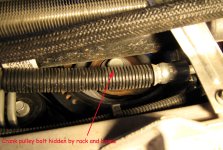
You can see in this photo when I was installing a supercharger to a C6 and had to pin the pulley to the crank

that bolt is maybe 5 inches long so the head of it hits the rack

cpbolt.jpg


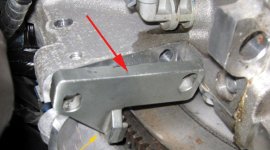
Tool to lock engine down during proper installing crank bolt

flywheeltoolb.jpg
 
Last edited:

teamzr1

Supporting vendor
GM engineers decided to use torque angle to get critical fasteners in the Gen III engine to the proper clamping force.
Torque angle is an engineering term for the act of applying light torque force to the single use factory fasteners, then rotating the fastener a pre-determined angle of degrees to stretch it.

T/A is used on the fasteners that hold the crank main caps, rod end caps, cylinder heads, crank pulley and other key areas to attain the required clamping force.

Usually a component comes loose because either the fastener was not tightened enough to keep from backing out of its threads, or it was overtightened it lost its ability to hold the component (lost its stretch ability and clamping force), which both cases are bad for maintaining the engine properly together (which shows up even worse if the engine is boosted) .
GM uses TA because it's a good way to create the appropriate clamping force on components, even with the many variations that occur in the production assembly process.
Because of this bolt stretching, GM recommends not reusing its production fasteners, like the head bolts.
If you're using aftermarket fasteners the stretch information is often invalid, as they are more robust then stock ones are.

Incorrect use of stretch bolts such as overtightening will cause them to lose their clamping ability and if engine is boosted the problem will even be worse since it can cause the heads to lift slightly or crank pulley to back off.
Never use a sealer, locktight, etc on the threads of these types of fasteners and the threads bolt is screwing into must be clean so proper T/A and clamping force is maintained.

If engine is running at a high boost pressure it may be safer to even tap the block's mating holes to use even larger sized head bolts then stock to assure the heads are clamped better to reduce chances of head lift with high boost causing head gaskets to come apart or leak and add a metal O-ring to allow even more pressure onto a good copper gasket that is clear sprayed to prevent radiator fluid passing through that is common with a copper gasket but it will work better then stock head gaskets.
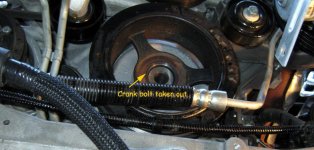

nobolt.jpg
 
Top