Drawings and S.O.
What it means and what's it all about
One could be forgiven for thinking that S.O stands for " Special Order" and indeed with some manufacturers it most probably did.
However, within the GM organisation - most certainly Chevrolet, Cadillac and Pontiac it once meant " Shop Order". I say it in the past tense as it is a language that no longer exists.
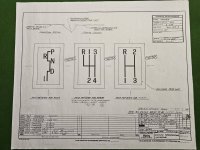
" Shop Order" essentially means to make one of. I am not sure when the system was first introduced, however, I have reference to Shop Order and an S.O. Corvette back in 1954 and you will see from the drawings that a S.O. 66 Corvette is listed, so I would guess that by the time the 68 car was introduced the S.O system was extinct in favour of computer digital systems which were fast becoming more widespread within the automotive industry.
S.O. projects could be GM Design & Styling or GM Engineering and indeed, in some cases - both. During the 50's S.O numbers began with 4 digits, however, by the 60's S.O. reference numbers were all five digits as you can see on the drawings.
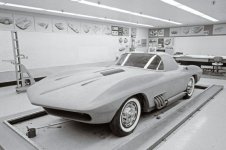
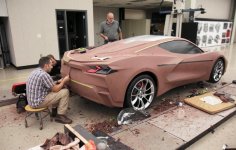
S.O. projects were largely experimental, prototypical and conceptual. The vast majority of which were individual sub assemblies and parts used in the make up of a complete motorcar. Complete S.O cars are incredibly rare and include original prototypes, show cars and cars like the 63 convertible made for Harley Earl so all in all just a handful of cars from 53 through to 67.
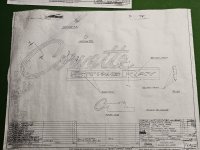
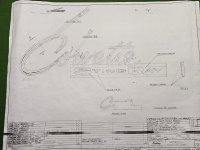
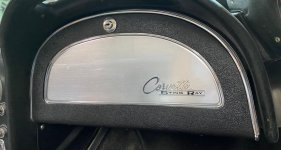
How did it work? I will endeavour to explain relating to the glove box lettering on the drawing.
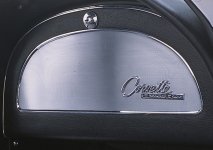
Management decide that they like the 64 Corvette design proposal for the glovebox but wish to see a completed item for review so instigate an S.O project to make one. We will keep it simple, and only use just a handful of components as even in a glove box, there could well be dozens of individual parts.
Make a glove box door S.O. number 1, make a hinge S.O number 2, make glove box emblem S.O number 3, make a back cubby box for the lid S.O number 4, make a glove box push button lock S.O number 5. The completed assembly becomes S.O number 6. All previous S.O. numbers are deleted. The glove box assembly S.O. number 6 is marked with S.O.6 typically using a black indelible marker if it was visible or a cream luggage tag to identify it easily and quickly. S.O. numbers 1 through 5 would never be used again and if the glove box was never completed all numbers would have be deleted. If by chance the project was to be re investigated then new S.O numbers would be automatically issued. The glove box may get approval for production so a released part number would be issued and subsequently all S.O. reference would simply vanish. The S.O system provided a paper trail of costs to make that glove box so that the bean counters could track and monitor all costs both internally and externally with contracted suppliers etc. And in the cases where the projects were carried out for other external GM organisations such as GM of Canada, or the Flint engine plant for example, then all costs for that particular S.O. project could be billed directly to them.
With regard to the S.O cars, I am sure all of us are familiar with the 63 Harley Earl convertible. This was a regular production line Corvette, a gift for Mr Earl. The car was shipped to GM Styling and under the S.O number 10323 was given the full make over to become the unique car we see today. " Make one of" . I am quite sure that the bean counters got a shock when they saw those costs!
So, a language not commonly understood and largely forgotten today from the golden period.
To end, I am led to understand that before WW2, S.O. terminology was also being used in GM but referred to " Styling Order".


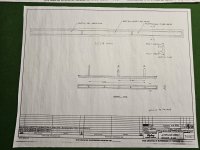


 You overlaid a paper sheet on the plastic drawing sheet then ran it through some stinky chemicals to create the blue print. If you have electronic files I have a plotter and would happily run some copies off to interested people?
 I'm at a rather posh do tonight but couldn't resist checking the new posts.