Are we still convinced that electric vehicles are the best way forward?

Roscobbc

Moderator
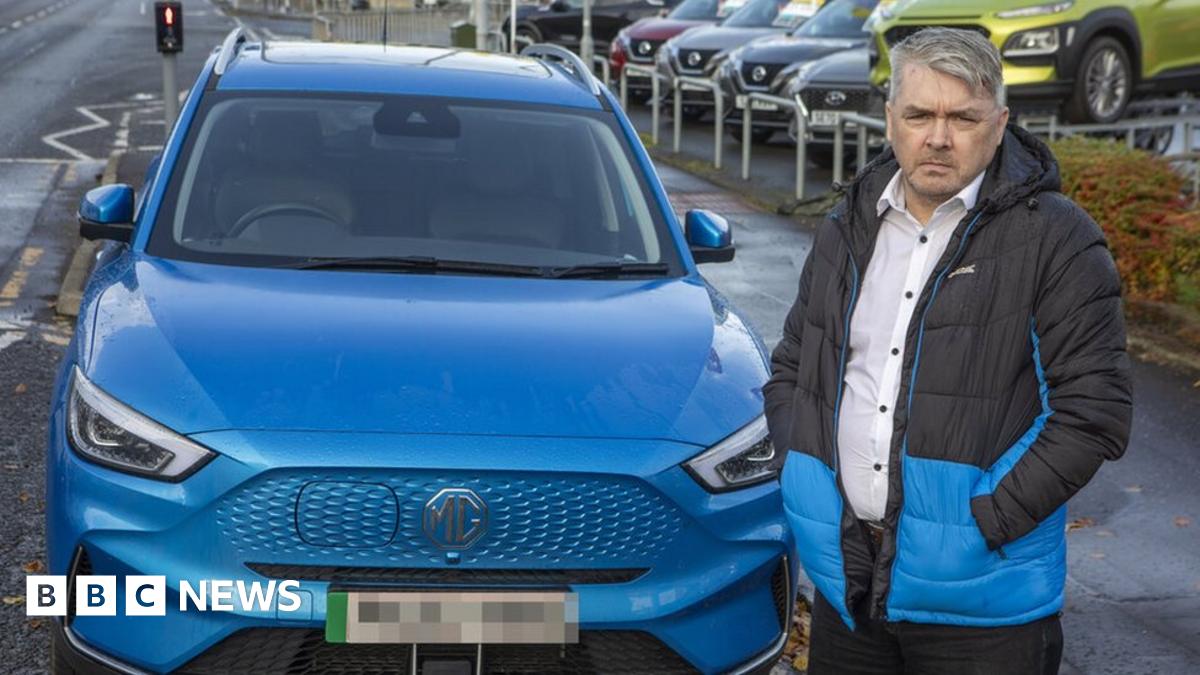
Dis you hear about the driver of an electric vehicle (last week perhaps) in the UK who couldn't slow the vehicle down - supposedly the brakes wouldn't work and he was totally unable to do anything other than steer the vehicle (sounded like it was an MG) - he called the police who talked him through put a 'sacrificial' police van in front of him so he could run-in to the back of it and bring him to a halt.
Brian Morrison, 53, from Glasgow, said he was heading home from work on Sunday night when he said his brand new MG ZS EV became stuck at 30mph. Police were forced to stop the runaway car by allowing it to slowly crash into their police van. MG Motor UK said it was trying to resolve the matter.
 

teamzr1

Supporting vendor
There are nameplates here in the USA they now say do not even charge the batteries while parked in a garage in case the vehicle catches fire :(
Also since there have been such fires home insurance companies do not want to insure the home for these types of fires are very hot and spread the fire inside the garages of homes to the living areas where your family can be sleeping

So like in cold winter weather and maybe 2 feet of snow and ice, rather of the vehicle in warmer garage you have
to go out in that weather with electrical wires while standing in that or worse when raining standing water

How does countries pass these vehicles to be sold when you can get stopped by a cop for having a turn signal bulb not working ?
 

Chuffer

CCCUK Member
Dis you hear about the driver of an electric vehicle (last week perhaps) in the UK who couldn't slow the vehicle down - supposedly the brakes wouldn't work and he was totally unable to do anything other than steer the vehicle (sounded like it was an MG) - he called the police who talked him through put a 'sacrificial' police van in front of him so he could run-in to the back of it and bring him to a halt.
Brian Morrison, 53, from Glasgow, said he was heading home from work on Sunday night when he said his brand new MG ZS EV became stuck at 30mph. Police were forced to stop the runaway car by allowing it to slowly crash into their police van. MG Motor UK said it was trying to resolve the matter.
Not heard of that one , well scary !! How about starting a campaign to ban all EV`s ???
 

Chuffer

CCCUK Member
There are nameplates here in the USA they now say do not even charge the batteries while parked in a garage in case the vehicle catches fire :(
Also since there have been such fires home insurance companies do not want to insure the home for these types of fires are very hot and spread the fire inside the garages of homes to the living areas where your family can be sleeping

So like in cold winter weather and maybe 2 feet of snow and ice, rather of the vehicle in warmer garage you have
to go out in that weather with electrical wires while standing in that or worse when raining standing water

How does countries pass these vehicles to be sold when you can get stopped by a cop for having a turn signal bulb not working ?
There was a recent incident in the UK where a house fire was started by an electric scooter being charged in the garage .
 

CaptainK

Administrator
Yeah I read that article about the 30mph incident with the MG EV. Its quite interesting to read from my "old school" mind, as my first thoughts where "put the clutch in and pull up the handbrake". But EVs, like most modern cars, are automatics and have electric handbrakes. Hmmm....

As for the recent airport fire, there are some photos doing the rounds and reports etc that it was a diesel Land Rover that started it all, and that the fire people said the burn pattern was wrong for an EV and not hot enough etc. Obviously I wasn't there, so don't know the real facts, just what I've seen on the internetz (which of course is always correct...).
 

Roscobbc

Moderator
Yeah I read that article about the 30mph incident with the MG EV. Its quite interesting to read from my "old school" mind, as my first thoughts where "put the clutch in and pull up the handbrake". But EVs, like most modern cars, are automatics and have electric handbrakes. Hmmm....

Many cars are 'drive by wire' - so driver hasn't actually got any mechanical connection with the vehicle - all inputs are transmitted electronically - as for braking system.....who knows?
 

Invetterate

CCCUK Member
A good proportion of the scooter fires have been discovered to be caused by poor quality after market chargers and cables and nothing to do with the actual "transportation device"! Getting to the actual truth is really difficult these days as we shall probably see with the Luton fire.... There is no doubt that the charging structure [and capacity] in the UK is woefully short of what is needed for the majority of people to go electric. For me, electric range is an issue too and the cost of public charging is 2-3 times the cost of home charging - great. As I only want one car [other than my Vette!], I have found that, for me and my driving requirements, a Plug-In hybrid is just perfect. I get to do something for the environment in terms of tail-pipe emissions and local noise and home charging is cheaper than petrol per mile. I estimate that around 75% of my 10,000 miles in the last year has been on electricity as the range of 40-50 miles [dependent on ambient temperature] covers most of my journeys which are local. For longer journeys, I have a 2-litre petrol engine powering the front wheels when selected. Petrol usage has equated to around 112mpg on this basis and about 40 -45 on petrol alone, I estimate. The electric motor drives the rear wheels and one can engage both for 4x4 mode for slippery conditions. The petrol engine produces 250hp and about the same in torque, the electric motor 143hp and 220 lbs-ft. You can also engage both for max performance. Drive-line power is then limited by the system to 350hp but you get the instant electric torque. The result is a mid-size estate car that has been independently tested to do 0-60 in 4.9secs and 100 in 11.8.... This has caught a few people unawares! Overall range is normally estimated at around 500 miles. I know this format won't suit everybody's needs, but for me, the electric part is great, the total package, so far, is wonderful and the best compromise overall. Just my two penn'orth!
 

Invetterate

CCCUK Member
Just taken delivery of my electric Lexus, as a company car it's a no brainer.
Electric cars only attract 2% BIK (benefit in kind, tax) where hybrid cars are at least 25%. So by going electric saves me a fortune and gives me more money to spend on the C4👍, not told the wife that bit yet 🤣
So far it's amazing to drive, instant power at any speed, comfortable, every gadget you could think of and cheap to run.
As a company car I think is great, would I buy one with my own money, no I don't think I would.

View attachment 24501
Glad you like it, Steve!
 

CaptainK

Administrator
Many cars are 'drive by wire' - so driver hasn't actually got any mechanical connection with the vehicle - all inputs are transmitted electronically - as for braking system.....who knows?
Many new cars, yes. But I'm really old school and mainly drive older cars that don't have drive by wire.

That said, my wife and I are getting a new car next week with an electronic handbrake and all the fancy mod cons. It does concern me having everything all controlled by the computer / electronics, but still, be nice to have a new car for first time in my life. (no, its not an EV - just a manual gearbox 1.5 turbo petrol Skoda Octavia Estate)
 

Invetterate

CCCUK Member
Many new cars, yes. But I'm really old school and mainly drive older cars that don't have drive by wire.

That said, my wife and I are getting a new car next week with an electronic handbrake and all the fancy mod cons. It does concern me having everything all controlled by the computer / electronics, but still, be nice to have a new car for first time in my life. (no, its not an EV - just a manual gearbox 1.5 turbo petrol Skoda Octavia Estate)
My 1999 C5 has a drive-by-wire throttle! What with the HUD, it was amazingly advanced in its day.

Kieran - enjoy your new car! The Skodas are great cars and I think you will be amazed by what a 1.5 litre engine can do these days.
 

Chuffer

CCCUK Member
Many new cars, yes. But I'm really old school and mainly drive older cars that don't have drive by wire.

That said, my wife and I are getting a new car next week with an electronic handbrake and all the fancy mod cons. It does concern me having everything all controlled by the computer / electronics, but still, be nice to have a new car for first time in my life. (no, its not an EV - just a manual gearbox 1.5 turbo petrol Skoda Octavia Estate)
Drive by wire is nothing new , I had one when I was kid . :ROFLMAO:$_58.jpg
 

Roscobbc

Moderator
Many new cars, yes. But I'm really old school and mainly drive older cars that don't have drive by wire.

That said, my wife and I are getting a new car next week with an electronic handbrake and all the fancy mod cons. It does concern me having everything all controlled by the computer / electronics, but still, be nice to have a new car for first time in my life. (no, its not an EV - just a manual gearbox 1.5 turbo petrol Skoda Octavia Estate)
Electronic handbrakes are potentially odd things - no one ever uses them for anything other than parking. They are also an 'emergency' brake. Wouldn't think of seeing how it works in the event of brake failure would you? - suggest you 'explore' its operation. My experience with a VW electric handbrake applied at roadspeed is that it will operate mildly agressively and you can apply the handbrake again for increased retardation if needed.
 

teamzr1

Supporting vendor
Ford Motor Co. would face $1 billion in fines from 2027 to 2032 under stricter proposed average fuel economy rules that target SUV and truck manufacturers, according to a filing the Dearborn-based manufacturer has made with the federal government.

The National Highway Traffic Safety Administration has proposed a fleetwide average mandate, known as the Corporate Average Fuel Economy standard, of about 58 miles (93 kilometers) per gallon by 2032. The more stringent rules are part of a Biden administration effort to cut emissions and accelerate the country's transition to electric vehicles.

That would disproportionately impact Ford and Detroit's other two major automakers, the company said in comments posted online Tuesday by the agency.
"Ford has never paid civil penalties under the CAFE program, and yet by NHTSA's own analysis Ford would likely pay $1 billion in civil penalties if NHTSA's proposal were finalized," the company said.

"This is alarming in and of itself, and threatens substantial economic hardship for Ford."
Ford's Detroit rivals, General Motors Co. and Stellantis NV, would also stand to face fines under the Biden administration's proposal, according to their Washington-based trade group, the American Automotive Policy Council. Under the administration's current proposal, GM's penalties would amount to $6.5 billion over the five-year period, while Stellantis would pay $3 billion.

Current rules call for automakers to achieve an average of about 49 mpg by 2026.
The industry-wide average for the 2021 model year was 25.4 mpg, according to the federal government's most recent data.
Ford and other manufacturers typically comply with the federal fuel economy rules by purchasing credits from electric carmaker Tesla Inc., which called for even tougher standards on Tuesday.
 

teamzr1

Supporting vendor
Automakers Honda and General Motors have ditched a $5 billion plan to create more affordable electric vehicles amidst an industry-wide slowdown in EV development.

The manufacturers agreed in April 2022 that they would combine powers to slash the battery costs on eco cars and develop vehicles below GM's $30,000 Chevrolet Equinox. The partnership was intended to compete with Elon Musk's Tesla which has aggressively cut prices this year.

But today, Honda CEO Toshiro Mibe confirmed the project had been cancelled, citing cost and logistical challenges.
He told Bloomberg: 'After studying for a year, we decided that this would be difficult as a business, so at the moment we are ending development of an affordable EV.

'GM and Honda will search for a solution separately. The project itself has been cancelled.'

Over the weekend, Ford Motor Chief Executive Officer Jim Farley warned electric cars had become 'a political football.'
Commentators have speculated Biden's support for the vehicles could tank his re-election chances next year.

In a recent statewide survey of Michigan voters, Trump led Biden 46 percent to 43 percent among the state's United Auto Workers union members.

The drop in Biden's numbers among union workers is thought to be due to the president's vocal support of EVs which employees worry could threaten their jobs
Support for EVs from the Biden administration has taken the form of an active push to embrace the cars by his Energy Department, as well as extending tax credits to EV buyers and subsidizing their manufacturing.

The current administration's plan has come under fire by Republicans who wish to oust Biden in 2024 and are arguing that green EV policy will eliminate American auto-industry jobs and ultimately force unpopular policy like California's future zero-emissions vehicle sales mandate.

Trump and Biden have both spent time in Michigan addressing the issue in recent weeks.

The former predicted that Biden's EV policies would lead to 'hundreds of thousands of American jobs' being eliminated.

I don’t get why Ford and GM, why these carmakers, aren’t fighting to make cars that are going to sell, to make cars that are going to be able to go on long distances,' he said during a rally last month.
 

teamzr1

Supporting vendor
A new study called “Overcharged Expectations” claims that without federal subsidies, the real cost of fueling an electric vehicle would amount to $17.33 per gallon of gasoline.

The study from the Texas Public Policy Foundation said electric vehicles do not stand alone in comparison with other vehicles because of the “wide array of direct subsidies, regulatory credits, and subsidized infrastructure that contribute to the economic viability of EVs.”

“Adding the costs of the subsidies to the true cost of fueling an EV would equate to an EV owner paying $17.33 per gallon of gasoline. And these estimates do not include the hundreds of billions more in subsidies in the Inflation Reduction Act,” the report said.

The study claims that a 2021 electric vehicle “would cost $48,698 more to own over a 10-year period without $22 billion in government favors given to EV manufacturers and owners” and said traditional gasoline-powered vehicles are cheaper than an electric vehicle without subsidies.

“It is not an overstatement to say that the federal government is subsidizing EVs to a greater degree than even wind and solar electricity generation and embarking on an unprecedented endeavor to remake the entire American auto industry,” the report said.
According to the study, about $22 billion in various federal and state forms of aid have artificially lowered the price of a 2021 electric vehicle by almost $50,000.

The report further estimates that the cost to other people for the strain on the power grid from charging electric vehicles comes out to $11,833 over 10 years, funded by taxpayers and utility ratepayers.
While everyone else pays more, state and federal subsidies shave $8,984, on average, from the real cost of an electric vehicle over 10 years, the report said.
“The stark reality for proponents of EVs and for the dreamers in the federal government, who are using fuel economy regulations to force manufacturers to produce ever more EVs, is that the true cost of an EV is in no way close to a comparable,” the report said.

The report noted that consumers have taken to hybrid vehicles far more than electric vehicles, adding, “Perhaps if D.C. politicians and bureaucrats stop trying to force Americans to build and buy their preferred types of vehicles, the cleaner and brighter future that they imagine will actually materialize.”
“It’s time for federal and state governments to stop driving the American auto industry off an economic cliff and allow markets to drive further improvements in cost and efficiency,” the report stated.

In a release on the foundation’s website, study author Jason Isaac said that the cost on the sticker of an electric vehicle hides a lot.

“The Biden administration and leftist states such as California have pushed for widespread electrification in less than 20 years through government subsidies and coercive regulations, but the price you see in the lot is not the true cost of an electric vehicle,” he said.

“Electric vehicle owners have been the beneficiaries of regulatory credits, subsidies, and socialized infrastructure costs totaling nearly 50 thousand dollars per EV. These costs are borne by gasoline vehicle owners, taxpayers, and utility ratepayers, who are all paying a hefty price for someone else’s EV,” he added.
“Proponents of EVs have falsely pushed the claim that EVs will soon cost less than gas-powered cars.
This study shows that EVs are still a long way from being competitive without massive subsidies,” study author Brent Bennett said.

“The Biden administration’s stringent fuel economy standards and regulatory manipulations are driving American automakers toward bankruptcy and adding thousands of dollars to the cost of every gasoline vehicle.
Rolling back these subsidies and burdensome regulations would save consumers money and stop the auto industry from falling off a financial cliff,” he said.
 
Top