
You are using an out of date browser. It may not display this or other websites correctly.
You should upgrade or use an alternative browser.
You should upgrade or use an alternative browser.
Petrol
- Thread starter Bondy
- Start date

Roscobbc
Moderator
I'm sure a C5 owner will come on here soon and advise you. Me? (and other earlier Corvette owners) perhaps will often use Tesco's Momentum Super unleaded 99.
Yes, Shell and BP will tell you about their special clean super unleaded fuels.......but they all now have ethanol content (as does Tesco's Momentum 99) - but at least Tesco is generally a little cheaper with a higher octane rating.
Yes, Shell and BP will tell you about their special clean super unleaded fuels.......but they all now have ethanol content (as does Tesco's Momentum 99) - but at least Tesco is generally a little cheaper with a higher octane rating.


Invetterate
CCCUK Member
Congrats on your first Vette! Hope you have many happy miles together!!
The car will run fine on standard unleaded as stated, but the ECU can detect higher octane fuel and switches to a different ignition/fuelling map. It will thus run better on E5 and if, as suggested, you use Tesco Momentum 99 [which is the highest octane fuel normally available in the UK], it is little more expensive than a big name 95 octane. The additive package for the 99 is also one of the best in the business and is really good at preventing problems liked clogged injectors. It's your car and your money, but I learned a lot of this when my car was remapped by a guy who has been remapping LS engines for the best part of 30 years and have used Tesco 99 ever since.
The car will run fine on standard unleaded as stated, but the ECU can detect higher octane fuel and switches to a different ignition/fuelling map. It will thus run better on E5 and if, as suggested, you use Tesco Momentum 99 [which is the highest octane fuel normally available in the UK], it is little more expensive than a big name 95 octane. The additive package for the 99 is also one of the best in the business and is really good at preventing problems liked clogged injectors. It's your car and your money, but I learned a lot of this when my car was remapped by a guy who has been remapping LS engines for the best part of 30 years and have used Tesco 99 ever since.
Thanks to you all for your petrol views and as with most things it seems we all have our own choice to make but at least I am now better educated by your responses. Cheers.Having just purchased my first Vette which is a 2008 base model coupe with the Z51 package I suddenly wondered what petrol is best. I believe the previous owner just used standard unleaded but would appreciate any advice. Cheers
Roscobbc
Moderator
Thing is........not all areas in the UK are alike relating to ethanol content in fuel. Some of the major names have, perhaps the full prescribed amount.......others less. If you want to be more specific there are Youtubers who take samples from local filling stations and test for percentage content. It's more of a 'thing' for the older cars really.


CaptainK
Administrator
As above E5 and E10 etc doesn't means it has to have exactly 5% or 10% ethanol etc. It means "up to" that amount, but not over the labelled number, meaning it can actually have 0% ethanol in it, and for example E10 can NOT have over 10% ethanol in it. Indeed Esso for a while was selling their E5 labelled petrol with actually 0% ethanol in it. It was quite handy.
Roscobbc
Moderator
If one is really concerned about the content of the fuel being used and not convinced that petrol retailers are being informative of its Ethanol content etc - there is always the option of buying drums of certified Sunoco fuel from Anglo American Oil (Anglo American Oil Company | Motorsport Fuels & Oils UK) in a multitude of leaded and unleaded octane ratings plus 'sustainable'.............but if already unhappy about the current £1-60 to £1-70 and higher pump gas prices........your eyes will water at the typical £100+ price for a 25 litre drum.

teamzr1
Supporting vendor
Congrats on your first Vette! Hope you have many happy miles together!!
The car will run fine on standard unleaded as stated, but the ECU can detect higher octane fuel and switches to a different ignition/fuelling map. It will thus run better on E5 and if, as suggested, you use Tesco Momentum 99 [which is the highest octane fuel normally available in the UK], it is little more expensive than a big name 95 octane. The additive package for the 99 is also one of the best in the business and is really good at preventing problems liked clogged injectors. It's your car and your money, but I learned a lot of this when my car was remapped by a guy who has been remapping LS engines for the best part of 30 years and have used Tesco 99 ever since.
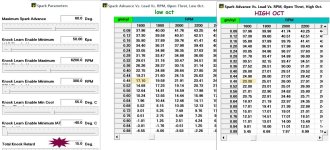
For those who like the techie detail
The PCM has two main timing tables
1 is High Octane and other is low octane
When the PCM sees more than 25% of fuel added to the gas tank it
jumps to the HIGH timing table and uses that until knock sensors report engine knock
If enough in series knock occurs the PCM assumes low quality gas or higher amount of Ethanol as
it causes the AFR to be much leaner causing knock
The PCM will pull up to 15 degrees (or when I tune PCM and change knock settings) of timing which kills off torque and horsepower
PCM than stays in low octane timing table until at least 25 % of fuel is added to the tanks
As I show as example a stock 1999 C5 the low and High Octane tables
The PCM calculates how much air/fuel is reported and what the RPMs are at that moment
Notice at 0.48 grms of air/gas at 1,600 RPMs when there was no knock issues it command timings of
24 degrees, but if there were knock jumps down to the low octane timing table and only commands 17 degrees of timing
This people can say it is fine to use lower grade of gas or higher percentage of Ethanol
Yea the PCM adjusts for it but the cost of losing performance until the next fuel is done
.
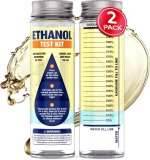
To really know how much Ethanol your pumping into the gas tanks is simple
Can buy this like Amazon or even make one
As shown fill water to the blue line
Fill rest with the gas
Mix and let sit a few minutes and then read now where the gas and water meets and what the amount
of Ethanol is in that tank of gas
.
Dorsetsteve
Well-known user
If I’m not mistaken US fuel has contained higher ethanol than that sold here in the U.K., so it would be logical that US manufactured cars would be less likely to be incompatible with higher ethanol content fuels that have become the European default in recent years.
It’s kind of a relief to drive a car like this and not concern myself with it. My Turbo Jap car that’s now sold could not be run on E10 due to pre ignition risks and the injectors not being suitable, E5 can be a bit hit and miss to find out in the sticks.
I do fill the Vette up with E5 though for various reasons including fuel stability.
It’s kind of a relief to drive a car like this and not concern myself with it. My Turbo Jap car that’s now sold could not be run on E10 due to pre ignition risks and the injectors not being suitable, E5 can be a bit hit and miss to find out in the sticks.
I do fill the Vette up with E5 though for various reasons including fuel stability.
teamzr1
Supporting vendor
You're correct but only for vehicles made later than mid 1990s and newer
But older vehicles like C4 and older have no real control of the ill effects of Ethanol or engine knock
Due to politics and lobbies have made it worse as used to be E10 but couple years ago
forced E15 being allowed and the gas pumps at stations do not even post on the pumps
the percentage of Ethanol being pumped into vehicles gas tanks
Many counties in the USA have mandates of a winter grade and summer grade gas makeup due to Ethanol
causing so much more issues in lower elevations and hot weather than in colder months
Add where vehicle is being used, where at higher elevations the AFR would be richer so lower octane is sold
where near sea-level AFR would be much leaner due to the Ethanol causing a lot more engine knock and less fuel mileage with loss of performance from that
But even at higher elevations less air/density with Ethanol also than outputs less HP/Tq
Those wanting best performance or for racing reasons :
Starting with the C5s the PCM has built-in adaptive strategy which learns and adapts to fuel type, elevation, weather and drivers style of driving
Say living at like 3,000 feet above sea-level and / or cooler weather the PCM adapts and adjusts for that
You go to a drag strip or other track racing for a day of racing and the Corvette suddenly runs like crap
The drag strip though is at sea-level and hotter weather but the PCM had learned for where you live so it is still commanding engine as being there when it has not learned for the strips location and weather
The lower the elevation is the higher the octane is sold and higher elevation lower octane is sold
Worse is the first couple of runs and the engine is sluggish and your ETs and trap speed are crap
That would be because PCM not having relearned and Ethanol causing engine knock so as mentioned
above the PCM is forced into low octane timing table along with PCM reducing more timing due to knock and now all strip runs will be with less HP/Tq
Good idea then is drive to the track location, buy higher octane gas there so PCM using the high octane timing table to reduce chance of knock and then drive maybe like 10–15 miles mixing up RPMs and engine loads for PCM to learn those conditions
Of course using an OBD2 scanner would allow seeing if and how much engine knock there is and if the timing looks like PCM is using the high octane table and if need be reset and clear fuel trims
But older vehicles like C4 and older have no real control of the ill effects of Ethanol or engine knock
Due to politics and lobbies have made it worse as used to be E10 but couple years ago
forced E15 being allowed and the gas pumps at stations do not even post on the pumps
the percentage of Ethanol being pumped into vehicles gas tanks
Many counties in the USA have mandates of a winter grade and summer grade gas makeup due to Ethanol
causing so much more issues in lower elevations and hot weather than in colder months
Add where vehicle is being used, where at higher elevations the AFR would be richer so lower octane is sold
where near sea-level AFR would be much leaner due to the Ethanol causing a lot more engine knock and less fuel mileage with loss of performance from that
But even at higher elevations less air/density with Ethanol also than outputs less HP/Tq
Those wanting best performance or for racing reasons :
Starting with the C5s the PCM has built-in adaptive strategy which learns and adapts to fuel type, elevation, weather and drivers style of driving
Say living at like 3,000 feet above sea-level and / or cooler weather the PCM adapts and adjusts for that
You go to a drag strip or other track racing for a day of racing and the Corvette suddenly runs like crap
The drag strip though is at sea-level and hotter weather but the PCM had learned for where you live so it is still commanding engine as being there when it has not learned for the strips location and weather
The lower the elevation is the higher the octane is sold and higher elevation lower octane is sold
Worse is the first couple of runs and the engine is sluggish and your ETs and trap speed are crap
That would be because PCM not having relearned and Ethanol causing engine knock so as mentioned
above the PCM is forced into low octane timing table along with PCM reducing more timing due to knock and now all strip runs will be with less HP/Tq
Good idea then is drive to the track location, buy higher octane gas there so PCM using the high octane timing table to reduce chance of knock and then drive maybe like 10–15 miles mixing up RPMs and engine loads for PCM to learn those conditions
Of course using an OBD2 scanner would allow seeing if and how much engine knock there is and if the timing looks like PCM is using the high octane table and if need be reset and clear fuel trims