Are we still convinced that electric vehicles are the best way forward?

teamzr1

Supporting vendor
Another rig to prevent we the people in deciding what we drive, from wacko Ca

U.S. House of Representatives Bill Introduced to Stop California’s Car Ban​

Encourage support from lawmakers on this proposal:

U.S. Rep. John Joyce (R-PA) introduced a SAN-supported bill (H.R. 1435) to protect Americans’ right to choose the technology that powers their motor vehicles.
The “Preserving Choice in Vehicle Purchases Act” was introduced in response to California’s plans to ban the sale of new gas- and diesel-powered cars and trucks in 2035 unless certain conditions are met.
If approved, H.R 1435 would prevent the U.S. Environmental Protection Agency (EPA) from allowing California’s Zero Emissions Vehicle regulations that would ban the sale or use of new motor vehicles with internal combustion engines from taking effect.
Lawmakers Must Hear from You Right Away!
 

Chuffer

CCCUK Member
Another rig to prevent we the people in deciding what we drive, from wacko Ca

U.S. House of Representatives Bill Introduced to Stop California’s Car Ban​

Encourage support from lawmakers on this proposal:

U.S. Rep. John Joyce (R-PA) introduced a SAN-supported bill (H.R. 1435) to protect Americans’ right to choose the technology that powers their motor vehicles.
The “Preserving Choice in Vehicle Purchases Act” was introduced in response to California’s plans to ban the sale of new gas- and diesel-powered cars and trucks in 2035 unless certain conditions are met.
If approved, H.R 1435 would prevent the U.S. Environmental Protection Agency (EPA) from allowing California’s Zero Emissions Vehicle regulations that would ban the sale or use of new motor vehicles with internal combustion engines from taking effect.
Lawmakers Must Hear from You Right Away!
So they wanna ban you from buying ICE vehicles but allow you to buy guns and go around shooting each other !! And I thought our UK politicians are F `in useless . :unsure:
 

teamzr1

Supporting vendor
Jaguar is recalling more than 6,000 I-Pace electric SUVs in the US due to the risk of the battery catching fire.

The British luxury carmaker
issued the recall for models from 2019 to 2024 and urges owners to park their vehicles outside until recall repairs are completed
The issue is due to the high-voltage battery made by LG Energy Solution, which may overheat and spark fires or force the SUVs to stall while driving.

Dealers will check recalled SUV batteries using software capable of identifying conditions linked to overheating and replace faulty modules for free.
The US National Highway Traffic Safety (NHTS) shared documents Wednesday about the recall.

'Vehicles have experienced thermal overload, which may show as smoke or fire, that may occur underneath the vehicle where the high voltage traction battery is located. Investigations are continuing,' the documents read.

'A vehicle thermal overload condition such as fire or smoke can result in an increased risk of occupant injury and/or injury to persons outside the vehicle, as well as property damage.'
Recalled vehicles will receive an update to the Battery Energy Control Module (BECM) software that will monitor the battery pack assembly operational status that indicates where the battery contains conditions that may lead to thermal overload.

This software provides an enhanced level of driver warnings about battery conditions.
Where the software determines a risk exists, the High Voltage battery charging capacity is limited to 75 percent.

Jaguar is set to notify dealers about the recall on June 8 and owners will receive direct communications on July 21.

The documents say the vehicle batteries were made by LG Energy Solution, which is under investigation by the NHTSA after five automakers issued recalls due to possible defects that could cause fires or stalling.
The NHTSA opened the probe in April 2022, covering more than 138,000 vehicles with the South Korean company's lithium-ion batteries.

General Motors, Mercedes-Benz, Hyundai, Stellantis and Volkswagen have issued recalls since February 2020, mostly due to internal battery failures that can increase the risk of fires.
The agency said it will write to LG and other companies that might have bought similar batteries to make sure recalls are being done when needed.

LG Energy Solution, based in Seoul, South Korea, noted that Jaguar is updating the battery-managing software on the vehicles while the incidents that led to the recall are being investigated.
'LG Energy Solution continues to closely work with our client Jaguar Land Rover to ensure that the investigation is concluded,' it said in a statement Thursday.

The investigation is another bug in a growing global rollout of electric vehicles by all automakers to replace internal combustion vehicles to cut emissions and fight climate change. Ford and BMW also have recalled batteries in recent years. Also, the U.S. National Transportation Safety Board investigated a series of fires in Tesla vehicles and said the high-voltage lithium-ion batteries pose safety risks to first responders after crashes.

Many governments are counting on EVs to replace gasoline-burning vehicles that emit greenhouse gases that cause global warming.
Documents in the Jaguar recall say the battery energy control module software will be updated by a dealer or online.
The dealers will also replace battery modules if needed.

The documents say that Jaguar has received 14 reports of vehicle fires in the U.S. starting in June of 2019.
 

Chuffer

CCCUK Member
Best thing to happen with EV`s IMO . Let em burn and then throw the misguided greenies and politicians on the pyre too ! 🤣
 

teamzr1

Supporting vendor
Is anyone really surprised at this ?

Electric vehicles lose a significant amount of range when loaded with heavy cargo, according to a new AAA study released Tuesday.
An electric pickup truck can lose nearly 25% of its range when hauling loads about 100 pounds less than its maximum capacity, the study said.
This also means of higher charging costs due to needing more often charging

"Range anxiety remains a top reason consumers are hesitant to switch from gasoline-powered vehicles to EVs," Adrienne Woodland, a AAA spokeswoman, said in a statement.

In the study, the auto club's researchers drove a 2022 Ford F-150 Lightning electric pickup truck with a 1,400-pound load of sandbags.
The load was 110 pounds less than the truck's maximum capacity.

A Ford spokeswoman wasn't available to comment on the study's findings.

AAA's test truck saw its range drop by 24.5% from 278 miles to only 210 miles, it said.
The test was conducted on a 7.5-mile oval test track and a dynamometer at The Automobile Club of Southern California's Automotive Research Center in Los Angeles.

Simply put, extra weight in a vehicle requires more energy for it to move, researchers said.

"Our testing revealed a significant range reduction, but it's important to note that the Lightning was loaded to near its maximum capacity," Greg Brannon, director of AAA Automotive Engineering, the auto club's division that conducted the study, said in a statement. "Most buyers will likely use their Lightning with a lighter load, resulting in a much smaller range reduction."

In addition to carrying heavy loads, highway driving or permanent loads can also reduce an electric vehicle's range, AAA said.

Drivers on highways move at higher speeds and aren't able to take advantage of EVs' technology that captures energy from braking and feeds it into the battery, according to experts.
Furthermore, electric vehicles with permanent loads such as equipment racks, built-in equipment trays and toolboxes, will also decrease their range, even without additional cargo.
 

Roscobbc

Moderator
I've been watching our regional police forces on reporting on Facebook with their commercial vehicle checks and prosecutions for trucks in dangerous condition. More importantly they are 'pulling' numbers of European (not UK) registered smaller trucks and vans that have been officially 'plated' to carry a specific weight (suitable for the trucks suspension, brakes and engine....... these are all ICE powered but when weighed 'dry' by the cops have very little (in some cases zero) load capacity, obviously all with fraudulent European documentation and the trucks being significantly, dangerously and illegally overloaded. The police are impounding the vehicles immediately and prosecuting the drivers, and forcing drivers/owners to make alternative arrangements for moving their payloads.
As irrevalent as it may currently seem on a thread relating to electric cars..........it will become very relavent given the significantly reduced payload that electric commercial vehicles will have.
Perhaps this Essex based company has the right ideas for localised deliveries?
 
Last edited:

teamzr1

Supporting vendor
They state :
Tevva’s 7.5t electric truck offers up to 140 miles

For use in a business that is low miles per charge and maybe 4–5 hours downtime to charge up
 

teamzr1

Supporting vendor
180 K is that not only 111 miles ?
Use it for reason of buying one, add the weight of what is loaded on truck and the UP TO becomes, be prepared to walk home :)

Wonder what the selling price is ?
 

Roscobbc

Moderator
180 K is that not only 111 miles ?
Use it for reason of buying one, add the weight of what is loaded on truck and the UP TO becomes, be prepared to walk home :)

Wonder what the selling price is ?
TBH I don't think most buyer will be concerned about the purchase price.....I believe there are significant grants and deferred finance options to draw buyers-in.
It will be interesting to see how the trucks cope with flattened batteries......I mean electric cars are seriously heavy......don't think they can be towed so need lifting on to a low loader......a 7.5 ton truck needing a tow is bad enough......what if all wheels need to be off the ground?
 
Last edited:

Steven Smith

CCCUK Member
It's alleged that many PHEV's (Plug in Hybrid Electric Vehicles) are chosen as Company cars because of the tax advantages - and then never plugged in; resulting in fuel consumption - and therefore emissions - no better than conventional petrol engined cars. My everyday driver (not company owned) is a non-plug in hybrid Toyota that returns around 47 mpg. I bought it because it's a useful estate, it's very easy for my handicapped wife to drive (no gear changes, manual or automatic) but best of all it incurs zero road tax. The government tax incentive to buy 'green' has worked on me, but the fuel consumption I'm achieving is doing nothing to reduce emissions.
Any PHEV's attract tax at the same rate as a purely petrol driven car, because there is no car made at the moment with sufficient battery range to qualify for the lower tax rate.
I have recently gone through the process or ordering a new company car. Our "benchmark" car is a Toyota Corolla estate, as it's a hybrid it attracts 27% tax which would cost me nearly 3k per year in tax, a Toyota Yaris wasn't much better.
I have ordered a very well specified Lexus UX300e, fully electric and the tax is 2% making the tax around £500 per year. I have to pay and upgrade fee per month but over the 4 years we keep cars I should be approximately £7000 better off.
 

Steven Smith

CCCUK Member
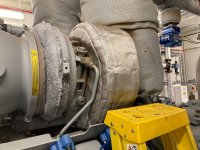
Talking of green energy, I have recently worked in two solar farms, each one has 8 back up generators for when the sun isn't shining, or demand is greater than output, pictures of one engine below, the ladder is 5ft for scale.
Each engine is a twin turbo 64 litre V20 and gas powered and each one can produce 3500kWh.
They are kept permanently ready, warmed up and can produce full power within 60 seconds.
I can only assume the gas required to have these permanent ready is "green" 🤔.
IMG-20230616-WA0003.jpgIMG-20230616-WA0004.jpgIMG-20230616-WA0002.jpg
 

Roscobbc

Moderator
258373355_1942308485938871_2101194810644461162_n.jpg

You'll all the love the logic of using generators to charge the electric (perhaps hybrid?) buses
 

teamzr1

Supporting vendor
Within 1 year, two vehicle cargo ships have burned down due to electric vehicle batteries starting huge fires
with a total loss, over 7,000 vehicles lost !

A sinking cargo ship carrying more than 3,700 cars is still burning at sea, two days after a fire - which was caused by an electric car - broke out and killed one crew member.

location.jpg

Salvage crews dealing with the ship off the Dutch coast have boarded the vessel for the first time as heat, flames and smoke eased.
'In the course of the morning, after measurements by the recovery companies, it turned out that the temperature on board the Fremantle Highway had dropped sharply,' the Netherlands' coastguard said.

Salvage workers boarded the ship, on which the fire 'is still raging but decreasing', while the smoke was also decreasing.
The workers established 'a new, more robust towing connection', the agency added. 'This makes it easier to move the ship and keep it under control.'

Government officials are now 'looking at various scenarios to determine the next steps', the coastguard said.
One crew member died and others were injured after the blaze started.

The entire crew was evacuated from the ship in the early hours of Wednesday, with some leaping into the sea and being picked up by a lifeboat.
The cause of the fire has not been established.

The Fremantle Highway was 14 miles north of the island of Terschelling on Friday afternoon, close to busy North Sea shipping lanes and an internationally renowned migratory bird habitat.
K Line, the company that chartered the ship, said on Friday that it was carrying far more electric vehicles than initially reported by the coastguard.

Company spokesman Pat Adamson said the ship was carrying a total of 3,783 new vehicles, including 498 electric vehicles.
The US National Transportation Safety Board has warned about the possible dangers of electric vehicle battery fires, a hazard that stems from thermal runaway, a chemical reaction that causes uncontrolled battery temperature and pressure increases.


fire.jpg
 

teamzr1

Supporting vendor
Volvo is recalling nearly all battery-powered electric trucks in the U.S. that were made over the past four years because of an issue that can cause a battery fire.

The checks effect about 1722 vehicles as part of the Volvo brand and nine Mack Trucks, built between 2019 and 2023.
The Swedish truckmaker will replace the batteries, following a fire in a battery that had been shipped to its Virginia assembly plant, according a report by the U.S. National Highway Traffic Safety Administration dated from last month.

The fire was contained inside the battery and hadn't spread, the report said, which was first reported by supply-chain website FreightWaves.

All the trucks are equipped with battery packs from supplier Akasol, with the issue isolated to a specific plant of the supplier in the U.S. Technical issues with the power distribution in the batteries may lead to debris inside the pack, which can cause a short-circuit, increasing the risk of a fire.

"The third generation version of the batteries Alkasol have delivered can catch fire," said Claes Eliasson, a Volvo spokesperson said.

The risk of fires is garnering more attention as battery packs increasingly power transportation. While combustion-engine vehicles are just as prone to catching fire compared to electric vehicles, battery fires are harder to put out because of self-oxidizing lithium salts that can lead them to keep reigniting. Extinguishing a battery fire can take thousands of gallons of water, much more than what it takes to stop a gasoline car fire.

U.S. truckmaker Nikola in June blamed foul play for a fire that affected several of its big rigs at its Phoenix headquarters, while the cause of a recent blaze on a container ship carrying thousands of cars including EVs hasn't been determined yet.
 

teamzr1

Supporting vendor
The boss of Ford suffered a ‘reality check’ already familiar to his customers when he spent the best part of an hour waiting for his flagship $50,000 electric vehicle to charge.
CEO Jim Farley set off on a road trip down Route 66 to showcase the company’s cutting edge electric F-150 Lightning pickup truck.
Posting regular updates on Twitter and LinkedIn he headed from Palo Alto, California to Las Vegas but admitted facing an uphill struggle.

‘I stopped at one of the most popular charging sites in the country, I-5 in Coalinga, and a low speed charger took me about 40 minutes to get just 40 percent,’ he told his followers.
‘It was a perfect reality check of what our customers go through and the importance of fast charging and what we’re going to have to do to improve the charging experience.’

Ford hailed 200,000 advance orders for the truck when it was unveiled in May 2021 in what the company described as a ‘Model T moment for the 21st Century’.
With a range of up to 320 miles on a single charge, it became the cornerstone of the company’s drive to produce 2million electric vehicles by 2026.

But with a $50,000 price tag, it is $15,000 more expensive than the gasoline fueled version and leaves customers at the mercy of long recharging times.

Just 15 percent of charging points allow rapid charging, according to the latest figures from the US Department of Energy, though last month the government promised another 30,000 by 2032.

Some early adopters have bought home charging stations, but the popular JuiceBox 40 costs around $650, and the ChargePoint Home Flex, about $750 with installation costs adding up to $6,000 to the bill.

Ahole Biden is pushing for two-thirds of new vehicle sales to be electric by 2032, but consumers have been slow to heed the call with Ford selling just 6,280 electric vehicles in July compared to 155,912 with an internal combustion engine.

Lauren Fix, analyst at the Car Coach, said: 'A lack of charging infrastructure is a major negative factor and consumers are increasingly frustrated.
'Charging stations are limited, very few fast chargers are available, and many of those that are accessible don’t work.

Really warm and freezing temperatures also shorten the battery life - especially when you use climate control - and can reduce the life by a third.'
 

FIVE RED

CCCUK Member
I recall many years ago that 'fast charging' a battery reduced it's life compared to regular charging. Of course I'm referring to pre lithium batteries, but wonder if the same applies to batteries in EV's.
 

Nassau65

CCCUK Member
Friends have recently moved from Miami FL to Atlanta GA, but work takes him back to Miami every three weeks or so, sometimes sooner. A round trip door to door of 1500 miles excluding any running around mileage. He usually drives and uses a Nissan Titan for the trip, and gets 15mpg and uses 100 gallons.
He recently tried an electric vehicle but found the range and charging times just to impractical for him. I think the lack of charging points was a major concern.
Once more charging points are installed more people may consider them for longer journey use.
 
Top